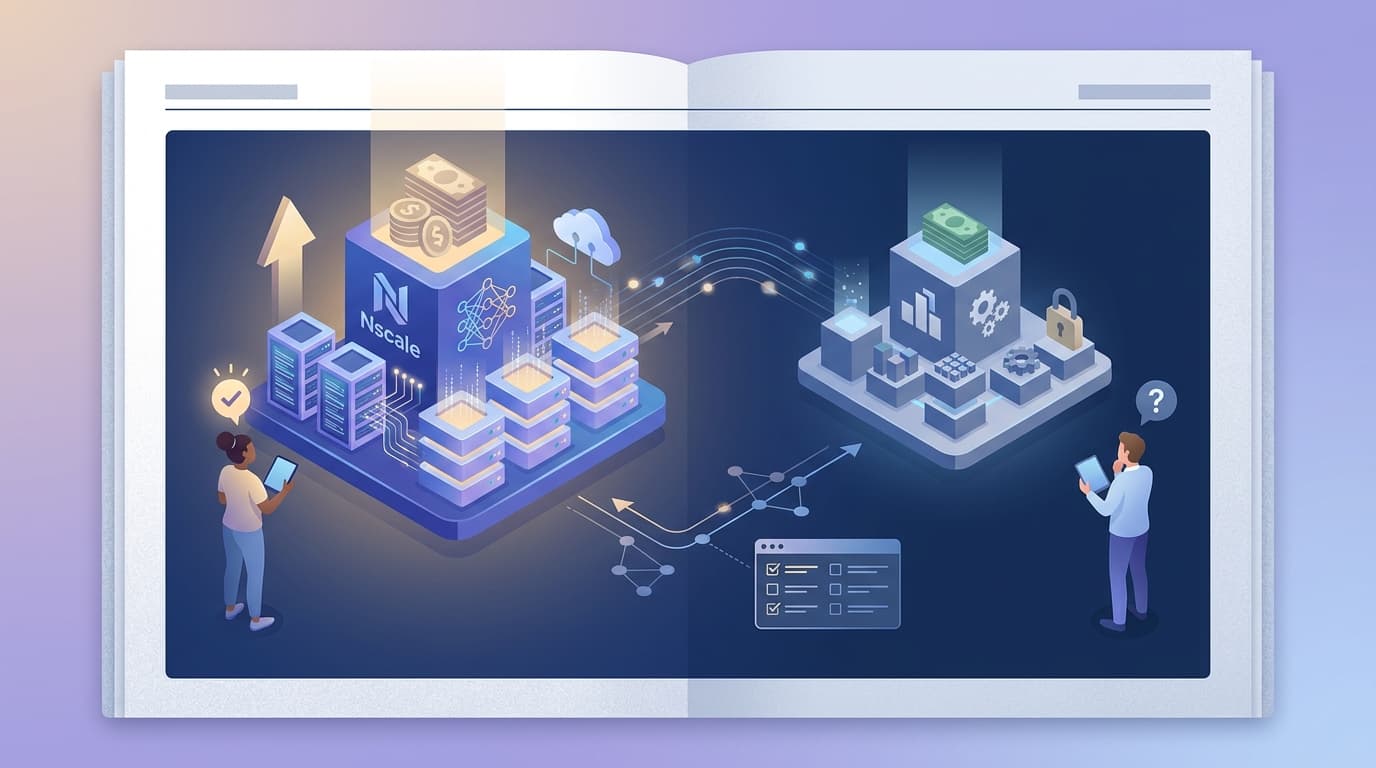
Anthropic's $200B Google Deal: What It Means for AI Vendor Strategy
7 May 2026
Anthropic has committed to spend $200 billion on Google Cloud over five years, securing multi-gigawatt access to Google's TPU chips, with new capacity coming online from 2027. The agreement, reported on May 5, sits alongside Anthropic's existing AWS partnership and Amazon investment, making the Claude maker one of the few AI labs anchored to two hyperscalers at once.
[Source: Engadget]
Why This Matters
The frontier labs are pricing in compute scarcity. $200 billion across five years dwarfs Anthropic's projected 2026 server bill of roughly $20 billion. Commitments at this scale signal that the labs expect demand, not cost, to be the binding constraint through the end of the decade.
Multi-cloud is now the default at the top. Anthropic was already deeply embedded with AWS. Adding Google as a second strategic anchor confirms that no single hyperscaler can serve a frontier lab's training and inference needs in parallel. The same logic will reshape how serious AI products are architected downstream.
Enterprise prices will reflect upstream economics. When the supplier of your AI provider locks in tens of billions per year, those numbers flow into token rates, seat licences, and rate limits. Don't expect AI inference to follow the cloud's downward cost curve any time soon.
Our Take
For most teams shipping software in 2026, this story is less about Anthropic and more about the shape of the AI vendor landscape you're building on. The major model providers are committing to long-dated, single-vendor cloud relationships. Your supplier's supplier is now a public, multi-year contract.
Two practical implications. First, design for provider independence. The performance and pricing gaps between Claude, Gemini, and GPT are wide enough today that being able to swap models or route by task pays for the abstraction work in months, not years. Second, treat AI compute as a tier-one line item in every roadmap. Token economics shift quickly, and the hyperscaler deals make it unlikely that frontier models become commoditised the way cloud storage did.
Architecture choices made in 2026 will compound. Build flexibility in now, or pay the lock-in cost later.