AI CV Screening in Europe: Build for Human Oversight
5 October 2026
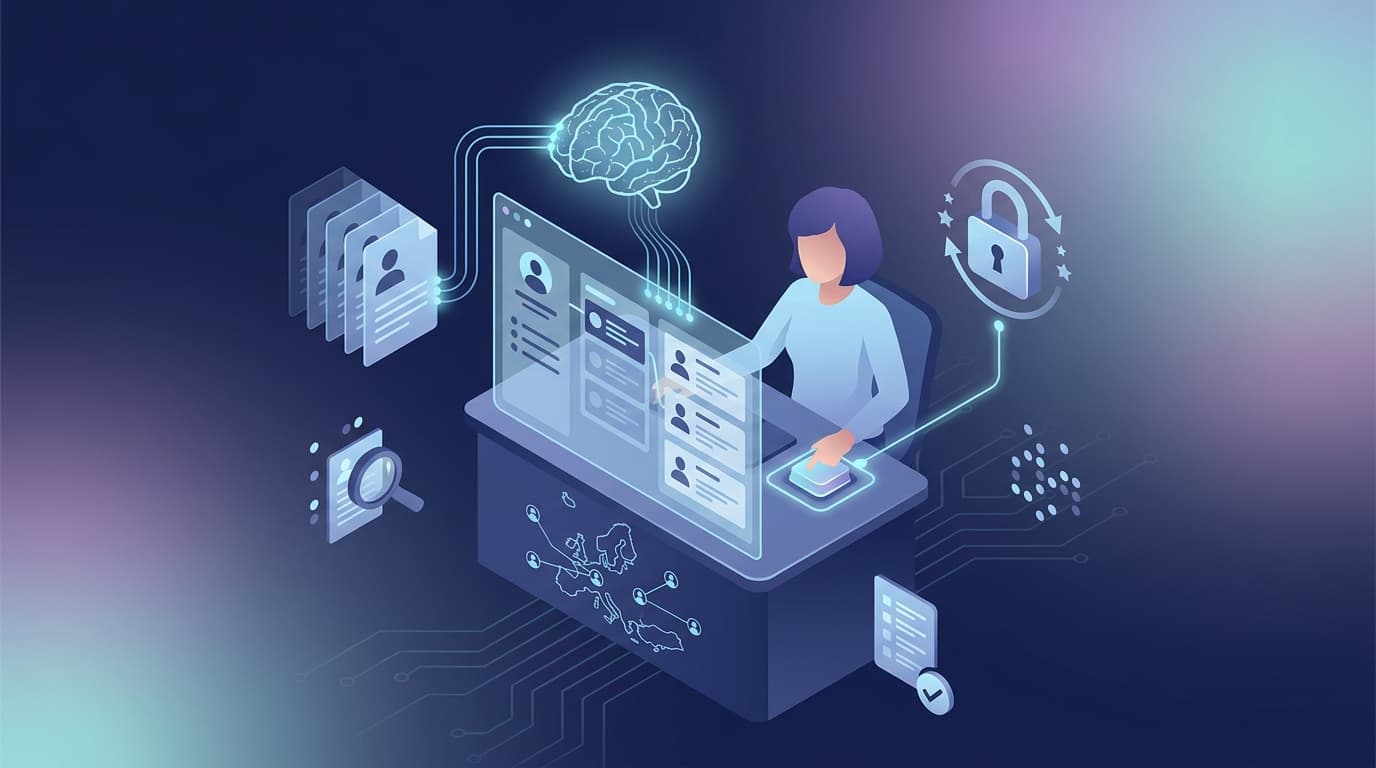
AI CV screening can give a growing business back hours that recruiters currently spend sorting applications, finding required skills, and preparing shortlists. It can also turn a hiring workflow into a legal, fairness, and reputation problem if a score becomes an unexamined decision. For European employers, that distinction matters now. Recruitment tools can process personal data, influence access to work, and reproduce historical bias at scale.
The useful question is not whether software should help with hiring. It already does. The question is where automation belongs, what a human must still decide, and what evidence the business needs to show that the process is fair. This guide explains a practical, user-centred route to AI-assisted CV screening that supports recruiters without delegating employment decisions to a black box.
Why Recruitment AI Needs More Than a Good Model
A CV is not a neutral data record. It contains career history, education, contact details, and sometimes signals about age, nationality, health, family status, or disability. When a system ranks applicants, even an apparently simple skills match can affect who gets an interview and who never hears back.
That creates four common risks:
- A proxy for protected characteristics. A model can learn patterns from school names, career gaps, locations, or past hiring decisions that have little to do with job performance.
- An opaque rejection path. If the team cannot explain why someone was screened out, it cannot meaningfully review a bad outcome or respond to a candidate question.
- Overconfident automation. Recruiters under time pressure can treat a score as a verdict, especially when the tool presents it with false precision.
- Weak data controls. CVs may sit in vendor systems longer than necessary, be used for model improvement, or be visible to people outside the hiring panel.
Under the EU AI Act, AI systems used for recruitment and selection are generally treated as high-risk. GDPR also applies to the personal data moving through the process. That does not make AI screening off limits. It means the workflow should be designed as a controlled decision-support system, with a clear purpose, documented checks, and accountable people around it. The same principle appears in our guide to GDPR-aware patterns for LLM applications: data flow and governance matter as much as the model.
Build a Screening Workflow That Keeps People Accountable
The safest first implementation does not ask an AI to choose who gets hired. It asks it to reduce repetitive work and make the recruiter better prepared to decide.
Start with transparent, job-specific criteria
Write the selection criteria before looking at candidates. Separate essential requirements, such as a required professional licence or language level, from preferences that are genuinely optional. Then configure the system to identify evidence against those criteria, rather than generating an unexplained overall “fit” score.
A useful output is a short, structured briefing: skills mentioned, relevant experience, gaps that need clarification, and links to the original CV passages. The recruiter can then validate the evidence in context. This is more useful to the user than a generic ranking and makes audit and appeal far more practical.
Use AI for assistance, not automatic rejection
Keep every material hiring decision with a trained person. In a well-designed flow, automation can:
- Extract standard information from applications.
- Flag applications that meet explicit minimum requirements for review.
- Draft consistent interview questions from the role criteria.
- Identify duplicate submissions or missing documents.
It should not automatically reject people, infer personality, or rank candidates using protected traits or vague cultural-fit signals. When a recruiter does reject an applicant, capture the human-reviewed reason and the criteria used. This is an operational control, not administrative overhead. It creates a consistent candidate experience and shows the organisation can improve its process over time.
Test fairness before and during rollout
Before using a tool on live vacancies, test it on representative, appropriately governed historical or synthetic cases. Compare its recommendations with the selection criteria and look for disproportionate errors. Test edge cases too: career breaks, non-linear education, international qualifications, and CV formats that do not resemble the majority of prior hires.
Monitoring must continue after launch. Track agreement rates between the recommendation and recruiter decision, overrides, false exclusions found at review, and candidate complaints. An AI evaluation framework provides a useful model: establish a baseline, define acceptance thresholds, and investigate meaningful drift rather than assuming a model remains safe because it worked in a demo.
Protect candidate data by design
Limit the data sent to the tool to what the task requires. Do not upload entire recruitment folders simply because a vendor accepts them. Confirm where processing occurs, whether prompts or documents are retained, which subprocessors are involved, and how deletion requests are handled. Access should be role-based, with audit logs for screening outputs and decisions.
For many employers, the right architecture is a lightweight layer connected to the existing applicant-tracking system. It keeps the workflow familiar for recruiters while making permissions, retention, and approvals explicit. That is a better foundation for scale than introducing a separate AI inbox that nobody can govern.
A Practical Rollout for a Cyprus or EU SME
Consider a professional-services firm receiving 200 applications for a recurring junior role. Its first goal is not to automate hiring. It is to reduce the time spent opening PDFs and copying details into a spreadsheet.
In the first phase, a custom workflow extracts only the approved fields, checks for the role's essential criteria, and prepares a reviewer brief. Each shortlist still requires a recruiter to open the CV, confirm the evidence, and record a reason. The firm runs this in parallel with its existing process for two hiring rounds, comparing outcomes and checking where the tool misunderstands local qualifications or career changes.
After the pilot, the team can add interview scheduling and candidate updates, but keeps approval gates for every consequential step. The benefits are operational as well as compliance-focused: faster response times, consistent communication, a clearer audit trail, and recruiters who spend more time assessing people rather than formatting data. That is the same pattern we recommend in workflow automation for Cyprus SMEs: automate repeatable administration while keeping judgement with the people responsible for it.
A Decision Checklist Before You Buy or Build
Use these questions to decide whether a proposed tool is ready for your hiring process:
- Can the team explain the criteria used for every recommendation in plain language?
- Is a qualified person required to review recommendations before an applicant is excluded or advanced?
- Can you test for bias and monitor overrides, errors, and complaints over time?
- Do contracts and configuration cover retention, data location, security, and deletion?
- Does the interface show evidence from the source CV, rather than hiding it behind a score?
If the answer to any of these is no, narrow the use case before expanding it. A focused solution that helps recruiters process applications consistently is more valuable than a broad promise of “automated hiring” that creates risk nobody owns.
Conclusion
AI can make recruitment more responsive and efficient, but it should not make it less human. The best CV-screening systems give teams a clearer view of relevant evidence, protect candidate data, and leave consequential decisions with accountable people. That combination supports fairer hiring, scalable operations, and a candidate journey that reflects well on the employer.
Novemind helps organisations turn AI opportunities into robust, usable workflows with the controls they need to grow responsibly. If you are assessing a recruitment automation idea, start the conversation and we can map a practical, human-led first release.
Related reading: